Centennial: 100 Years of Otis College Alumni

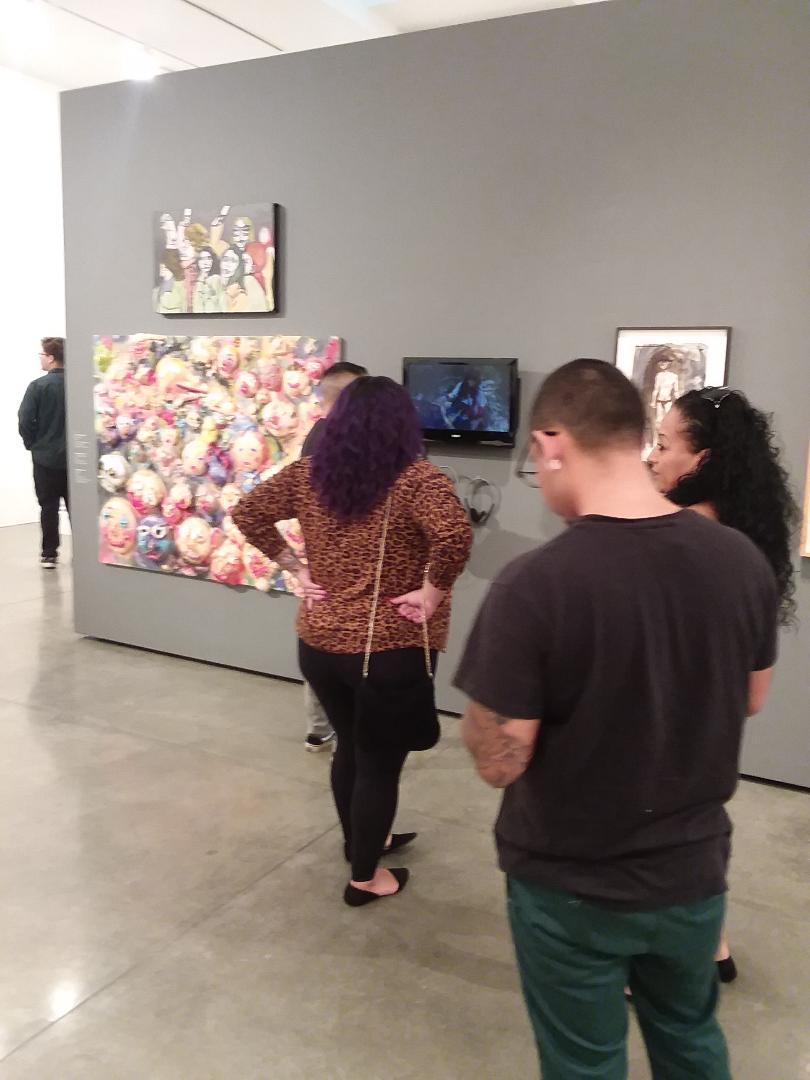
[NOTE: Victoria Delgadillo is not a graduate of Otis College, but her collaborative film project with Raul Baltazar called “Califas” was screened as part of this exhibit celebration.]

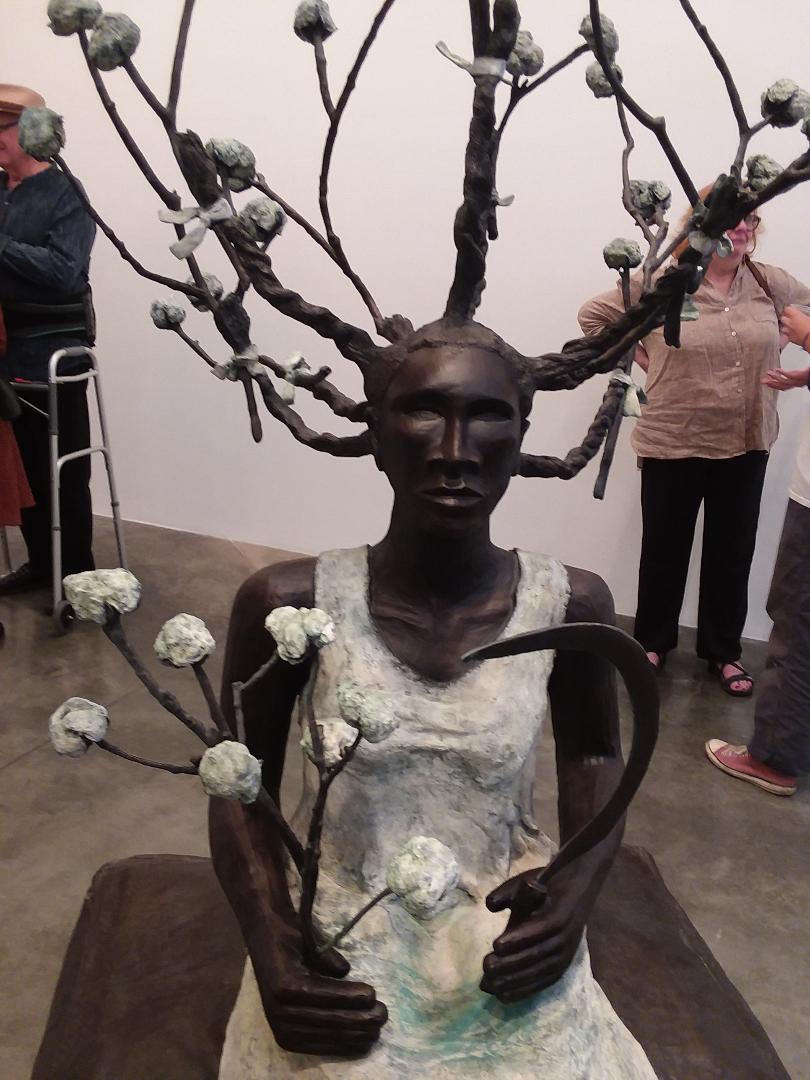
September 7 to December 7, 2019. Celebrating Otis College’s one hundredth year, Centennial is a group exhibition of selected works by notable alumni spanning the 1920s to the 2010s. Centennial offers a glimpse into both the range of artists who attended Otis College, as well as work that has come to represent a specific historical moment, focus, and aesthetic engagement. While the exhibition brings together artists working within diverse histories, places, and experiences, each work has a relationship to the present. Centennial is a nod to artistic process, as well as the 100 years of artists’ work sharing space in the Ben Maltz Gallery.

Alumni artists in the exhibition include the following: Bas Jan Ader, Mary Sue Ader Anderson, Kelly Akashi, Michelle Andrade, John Baldessari (in collaboration with Meg Cranston), Raul Baltazar, Billy Al Bengston, George Chann, Katy Cowan, Kohshin Finley, Kim Fisher, Teresa Flores , Kristen Foster, Gajin Fujita, Kio Griffith, Judithe Hernandez, Dakota Higgins, Noah Humes, Sara Hunsucker, Lorenzo Hurtado Segovia, Dorothy Jeakins , Joseph Mugnaini, Sandeep Mukherjee, Alan Nakagawa, Ruben Ochoa, Rick Owens, The Perez Bros, Kour Pour, Ken Price, Pamela Ramos, Vincent Ramos, Steve Roden, Alison Saar, Forouzan Safari, Eduardo Sarabia, JT Steiny, Masami Teraoka, Daveion Thompson, Kent Twitchell, Jeffrey Vallance, Mark Dean Veca, Tyrus Wong, John Weston, Bruce Yonemoto, Liz Young, Milford Zornes.

The MexiCal Biennial presents: CALAFIA (el fin del parai­so) / Final Round

“Know then, that due east of the Indies there is an island called California, very near to the locale called the Terrestrial Paradise. It was populated by Black Indigenous women, without men among them. They possessed strong and firm bodies of ardent courage and great strength. Their island was the strongest in all the world, with steep cliffs and rocky shores. Their arms were decorated with gold, as were the harnesses of the wild beasts they tamed and rode.” Garci Rodri­guez de Montalvo, Las Sergas de Esplandián

Thus began the creative narration for Mexicali Biennial’s 2 year project called CALAFIA: Manifesting the Terrestrial Paradise. Raul Baltazar and Victoria Delgadillo’s film collaboration for this exhibit with the title of Califas was called dystopian in the press and at the University of Paris a student asked, “Is it ok to laugh while watching this film?”

In the end, the Mexicali Biennial closed the 2 years of programming and exhibits with echos between Calexico, California and Mexicali, Baja California. There, among the historical exhibits of bones and time elapsed graphs at the Institute for Cultural Research Museum in Mexicali, was an installation of all the props and costumes used in the filming of Calafia.  The Cultural Research Institute’s Director was elated.

Below are the border event offerings and locations during the closing of CALAFIA: Manifesting the Terrestrial Paradise in Calexico and Mexicali

Friday, January 17, 2020
Steppling Art Gallery, SDSU, Imperial Valley Campus
CALAFIA: Manifesting the Terrestrial Paradise. Visual Arts exhibition

Friday, January 17, 2020
Planta Libre Galeri­a Experimental
Mexicali, Baja California MX
Films screenings, followed by Q&A

Saturday, January 18, 2020
Institute for Cultural Research Museum (IIC Museo)
Mexicali, Baja California MX
Installation and film screening of Calafia by Victoria Delgadillo and Raul P. Baltazar
Runs through February 2, 2020

Saturday, January 18, 2020
Workshop: “My face hurts from being so white”
A metaphorical intervention process of internal and external whiteness using colored t-shirts

Saturday, January 18, 2020
Tianguis del Caballito, I21 Art Space. Local I21
Mexicali, Baja California MX
A site specific solo project to connect diverse Mexicali audiences to multidisciplinary art practices.

Sunday, January 19, 2020
In front of Toyota Car Dealership, Calzada Cetys
Mexicali, Baja California MX
A billboard project

Sunday, January 19, 2020
A border fence performance
Calexico Side: Parking lot at 426 E. 1st St, Calexico, CA
Mexicali Side: Heroes de Chapultepec Park Avenida Madero, Mexicali, B.C.

Images: Courtesy of the MexiCali Biennial and the artists.

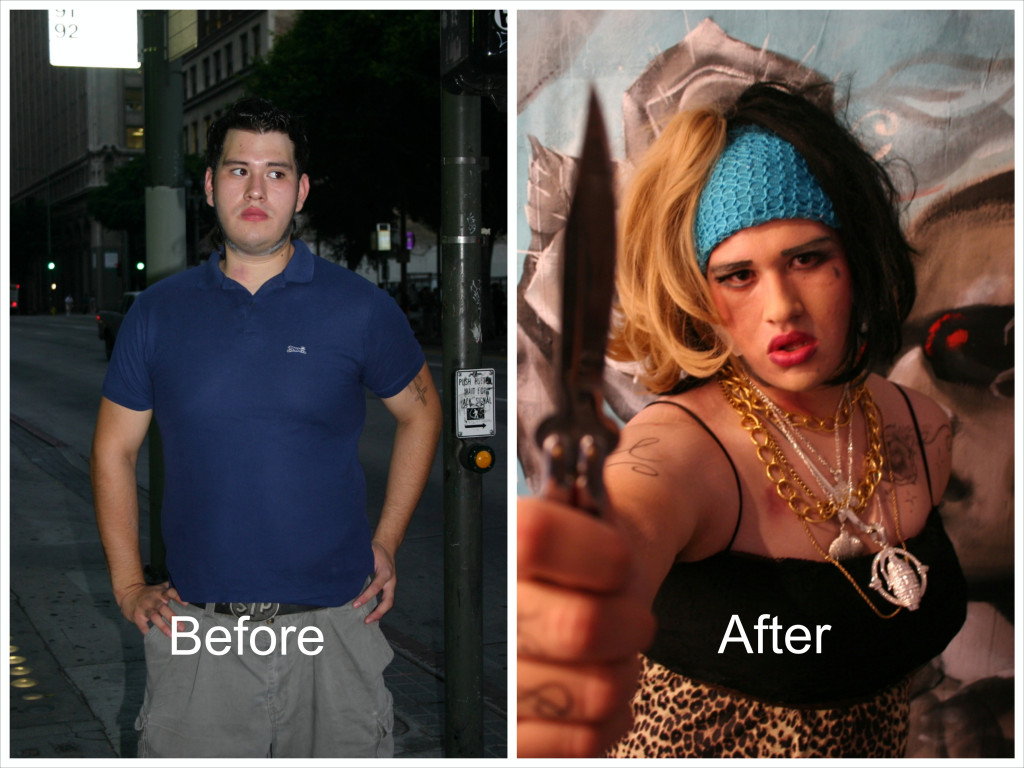
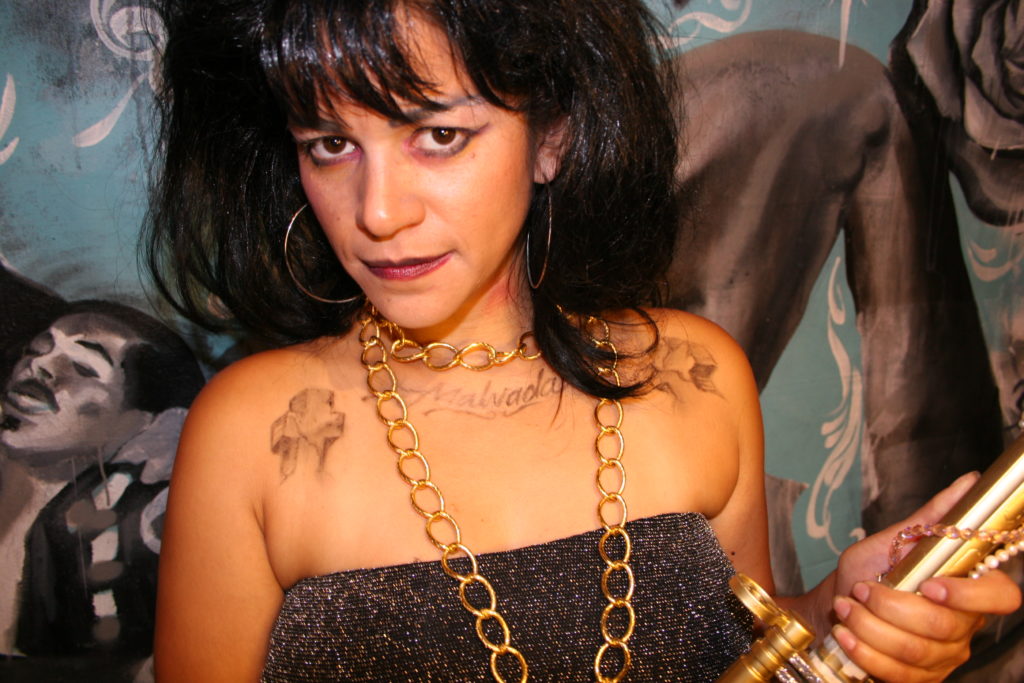
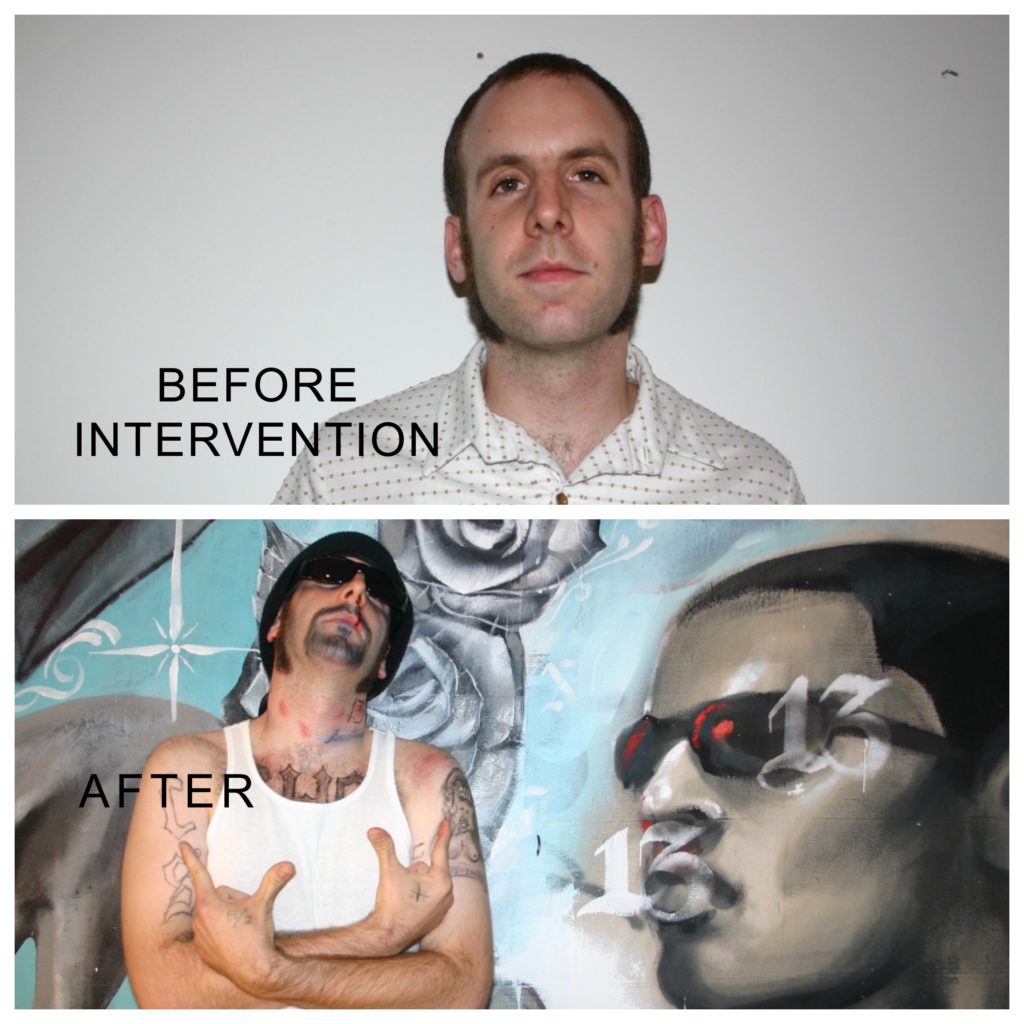
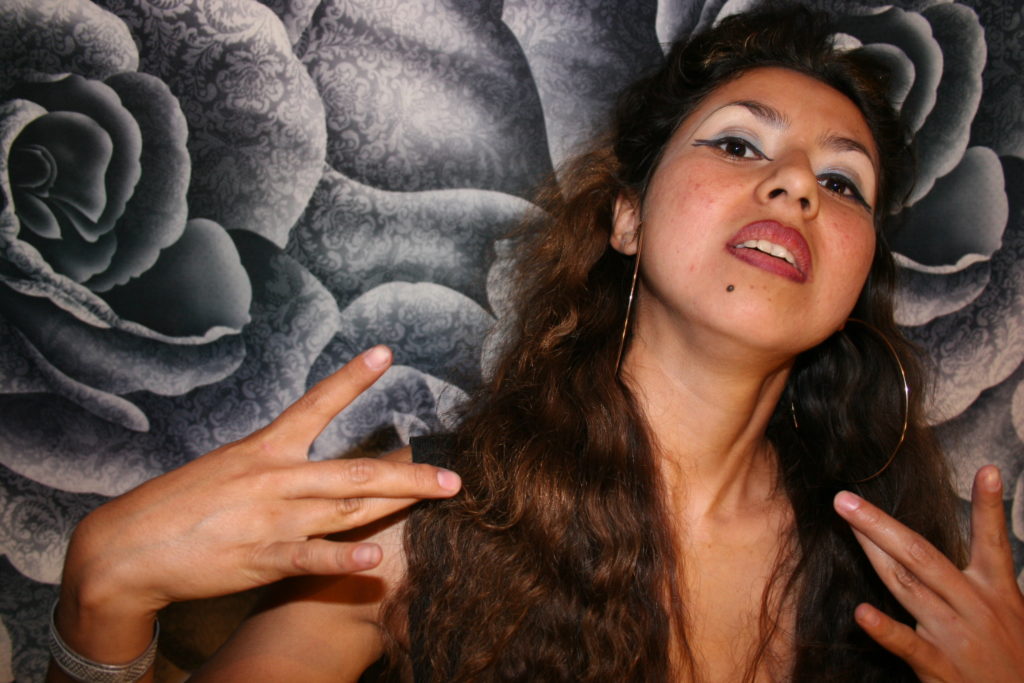
Glamour Shotz

After a Glamour Shot

Glamour Shotz, A transformative store front beauty shop and performance–where you are the star!

In 2005, Glamour Shotz was part of a larger exhibit on gentrification. Gentrification is defined as the process of renewal and rebuilding accompanying the influx of middle-class or affluent people into deteriorating areas that often displace poorer residents and artists.

The entire exhibition was called The Store Front Project, curated by Adrian Rivas at Gallery 727, located in downtown Los Angeles, California.  Adrian was inspired by the writings of Grant Kester, a Professor of Art History in the Visual Arts Department at UCSD. Each week Adrian’s store front gallery space would become a different business, mimicking the drastically changing downtown area of Los Angeles. The original concept of a Puerto Rican Pride photo studio business was that of photographer, Vanessa Sepulveda Shaushkin.  Multi-disciplinary artist Raul Baltazar added the self-scripted and impromptu political performance aspect to the store as the store front security guard, greeter, club barker and host.

Rigo Maldonado and Victoria Delgadillo were agitated with the sudden American media approval of Gwen Stefani (lead singer of No Doubt) dressed like a Chola. A Chola is a Mexican/Chicano term used to refer to a teenage girl who is closely associated to a street gang and dresses in a unique (non-mainstream) style of make-up, hair, and clothing.

The Chola style has been common in California barrios, since the 1920s. In California, teens dressed in a Chola/o fashion walking on a public street were/are photographed by the police and placed in a gang member file, even if they are not in a gang. Public schools have punished teens who dress in this fashion. To witness a media campaign on Chola attire being acceptable, because a white woman is wearing it, is offending to decades of Latino teens in California (and Mexico) who have been persecuted for this style.

As the two principal curators, Rigo Maldonado and Victoria Delgadillo scripted the various scenarios that would transpire in this beauty make over photo studio called Glamour Shotz. Initially there was a curatory desire to beckon gentrifiers to wear the Cholo style, because it was a way of “returning the gaze” [Anna Everett, Returning the Gaze: A Genealogy of Black Film Criticism, 1909 -1949 – March 12, 2001.] Rigo Maldonado created the above promo piece made for Glamour Shotz.

The concept of engaging people who were passing by to agree to a free make-over failed.  People passing by seemed uncomfortable wearing the gang style. Yet people lingered with curiosity outside and across the street, to view the process through the store window. Fortunately, the organizers’ artistic community loved playing the roles and getting their glamour shotz. Drop-by artists enjoyed creating some of the makeovers as well. Ms 40oz, Jennifer Salinas was an actual Miss Teen America contestant from Chicago, who performed a gang style blessing for all the fallen hommies (gang members), with a pseudo ribbon-cutting ceremony for the the Glamour Shotz storefront. Victoria Delgadillo’s family owned businesses in San Diego. The two elements they had for a successful grand opening was a mural unveiling and  a mariachi band.  Victoria brought these ideas to Glamour Shotz (writing, directing and producing the grand opeing performance). See segment above “Ms 40 oz.” 

The week long Glamour Shotz installation store culminated with a fashion show.

https://vimeo.com/480035331

[Note: “Aztec Gold vs Glamour Shots” a documentation here by Victor Payan and Pocha Pena recaps the scenarios and store front space as it was conceived by curators Rigo Maldonado and Victoria Delgadillo. The beautiful mural “Fallen Cholo” was created and painted by muralist/artist Midst for Glamour Shots. The mural made a perfect backdrop for our urban transformations.]